
Author Interview: Dorothy Greco, “For the Love of Women”
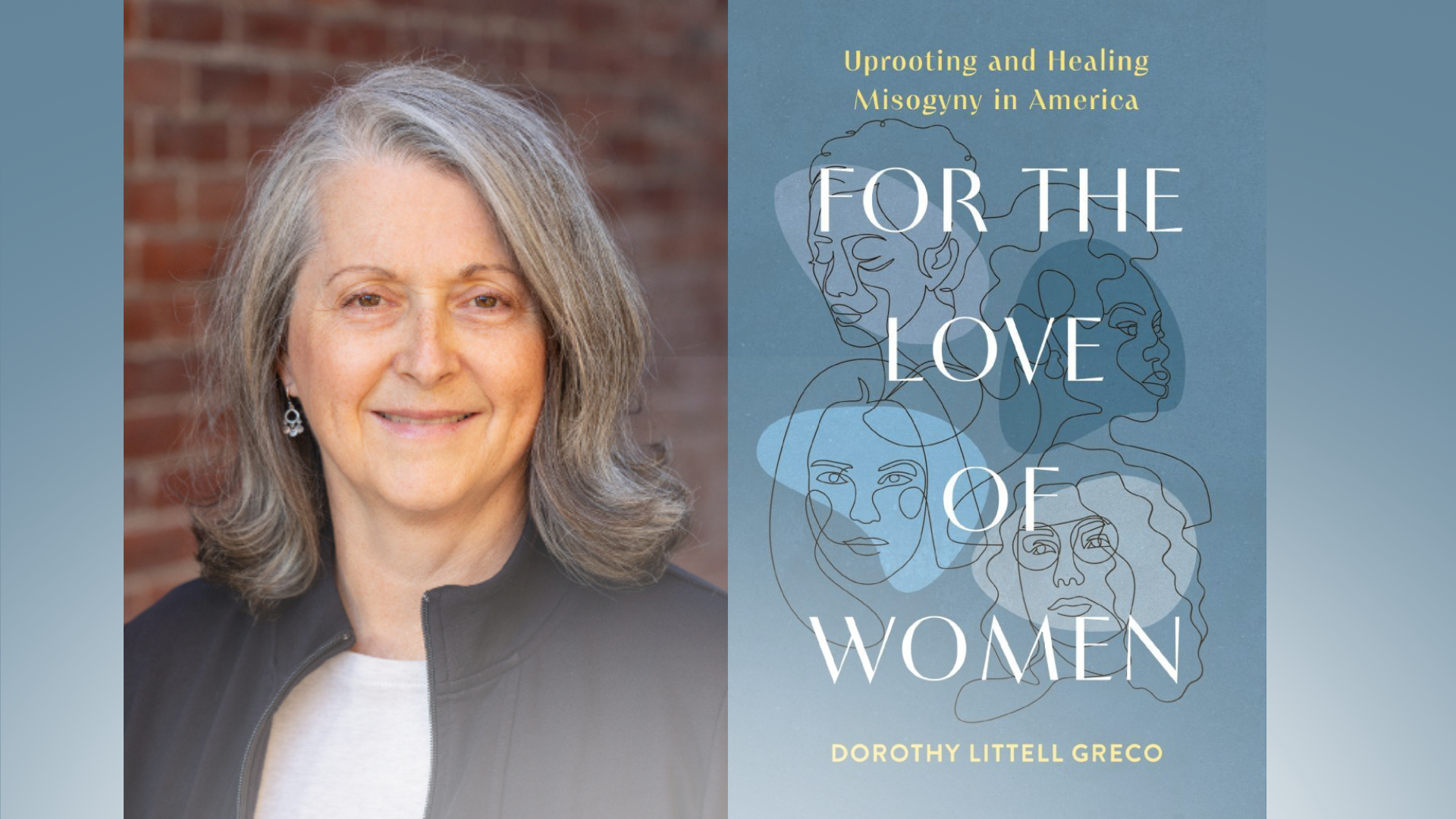
In her book For the Love of Women: Uprooting and Healing Misogyny in America, author and journalist Dorothy Greco explores the complexities women face across 6 areas of American life. Recently, she joined the Women, Work, & Calling team for a conversation about what the data, Scripture, and women’s lived experiences tell us about this thought-provoking topic.
“...if the systems that run our world were shaped by a love for women, that would be a game-changer. Then misogyny really would fall. That was my motivation for the title of the book—For the Love of Women.”
WWC: Misogyny is a powerful word, the kind of word you might hear in a women’s studies class, but don’t use in daily life. How would you define it in everyday language?
Dorothy Greco: When I started writing For the Love of Women, I knew I wanted to expand the definition of misogyny. Because the dictionary defines it narrowly—the hatred of women—far too many men will claim, “I don’t hate women. I’m married, and I love my wife.” Or, “I love my sister. I love my mom.” This allows them to opt out of the conversation. We need a more comprehensive definition, and here’s what I came up with:
“Misogyny is a persistent, insidious belief that men’s ideas, wants, needs, and experiences are more important than women’s. And that legal, religious, and social systems, as well as intimate relationships, should uphold this principle. This belief system subsequently influences the laws, policies, practices, and ethos of a given culture.”
We may be more familiar with misogyny as it plays out between two people, such as a boss who makes a sexist comment to his female employee or construction workers catcalling a woman walking past. But misogyny is also deeply systemic.
In the United States, women couldn’t vote until 1920. (And because of racism, it took even longer for many Women of Color to gain this right.) Because of an ancient doctrine known as coverture, women’s identities and legal rights were suspended when they got married. The moment a woman said, “I do”, she abdicated her right to say no to sex with her husband. In other words, a husband could legally pressure, coerce, or physically force his wife to have intercourse and get away with it. Shockingly, this type of marital rape was not considered a crime in every state until 1993.
Misogyny shows up everywhere: in places we would expect (like the pornography industry) and in others we might not (like the church).
WWC: What motivated you to write the book? Why now, and why this topic?
Dorothy Greco: The motivation came from a combination of personal experiences and a deep concern for how women and girls are treated throughout the world.
I’ve had to navigate what it means to be a woman in spaces dominated by men throughout my entire life. I was an athlete from childhood through college, and I witnessed the disparities between boys’ and girls’ sports, even after Title IX was passed (legislation that requires equal athletic opportunities for men and women).
During the first decade when I worked as a photo-journalist, I shot many professional sporting events. There weren’t many women photographers covering sports at that time and we were harassed in ways that the male photographers never were. While on the sidelines at the New England Patriots’ football games, female photographers would get pelted with snowballs and called every vulgar name you could imagine.
In addition to my personal experiences, the book tracks the profound injustices that women and girls have to endure. In writing the book, I wanted to affirm, “This is real. You’re not making it up.” All of us are affected by misogyny—even men.
WWC: Tell us more about these six areas of misogyny in social structures that you wrote about. Why those 6?
Dorothy Greco: There could have been more but these six areas are all familiar and offer more than enough examples.
I focused on healthcare, the workplace, the government, entertainment and media, intimate relationships, and the church. The book has almost 400 footnotes, so I provided evidence to quiet the doubters and the skeptics.
Most women have had difficult experiences in healthcare at some point. Obviously, not all of them point to misogyny. I’ve had long-term illnesses for 25 years and during that time, I have faced rude and skeptical practitioners who don’t listen to me or who won’t accept that I know my body better than they do. I’ve had doctors accuse me of exaggerating and tell me to cheer up.
We might be more inclined to conclude, “That doctor was having a bad day,” than to recognize there’s something bigger and more nefarious at play. After doing the research for this book, I realized it’s not just me! Misogyny is baked into the healthcare system.
Studies have shown that when women go to the ER with symptoms of a heart attack, they’re more likely than men to be sent for a psychiatric evaluation than to have the necessary blood work done that could confirm if they’re having a heart attack. Women haven’t been included in most clinical drug trials until recently, and far less research money is devoted to issues that affect women, such as endometriosis.
In the media and entertainment industries, women are constantly objectified (seen as sexual objects for others’ pleasure) and commodified. Ridiculous beauty standards are imposed upon us, and now, thanks to social media, many young girls are battling self-hatred and anxiety because they don’t measure up or are pressured to give in to the sexual demands made by their peers (such as sending nude photos via text).
As we begin to identify all the ways misogyny shows up, we can’t unsee it.
WWC: I can imagine some of our readers reacting to the word misogyny because they may associate it with a liberal agenda or a specific ideology. Misogyny is a highly charged word that you invite readers to sit with. So, how does it relate to the Christian faith?
Dorothy Greco: I think it has the capacity to provoke a similar response as the word racism. Just as nobody wants to be labeled as a racist, nobody wants to be identified as a misogynist, so it can be a triggering word.
We can’t heal a sickness until we have identified the disease. If we hope to end gender-based pay inequalities, mistreatment in the healthcare system, rape culture, and other forms of misogyny, we have to correctly identify the problem and then engage in these sometimes uncomfortable conversations.
Regarding the second part of your question, Christianity does not promote or excuse misogyny. God loves women. Full stop. We can see this through the arc of Scripture. In the creation account, nothing suggests that Adam is the boss and Eve is the helper or that God loves Adam more than Eve. They’re called to partner together to fulfill God’s mandate (Genesis 1:27-28). A hierarchical relationship is not the same as a partnership of two equals. I believe God wants the latter.
By studying the New Testament, we can see how Jesus interacted with women in ways that contrasted how religious leaders or most other men treated them. He listened to women, engaged with them, healed them, taught them, respected them, and released them to participate in kingdom work.
In my opinion, if more men loved women the way Jesus loved women, and if the systems that run our world were shaped by a love for women, that would be a game-changer. Then misogyny would fall. That idea was the genesis of the book’s title—For the Love of Women.
WWC: Yeah, misogyny quenches godly imagination by allowing exterior factors to mute what God designed and calls out in women's lives.
Dorothy Greco: Beautifully said.
WWC: Let’s talk about misogyny in the workplace. What should women be aware of as they work?
Dorothy Greco: First of all, if you’re experiencing something that feels unjust, unfair, or harmful, you’re probably not making it up. I don’t know many women who haven’t experienced some form of misogyny during their careers.
Workplaces in the US are not designed for women, and particularly not for mothers. Only a very small percentage of mothers are offered paid maternity leave, there are few childcare subsidies, and a declining number of employers offer flexible hours or the option to work from home. Because of the high cost of living, few families can exist on one income right now, which means even if a woman wanted to stay home during her child’s early years, she might not be able to. We tell women that mothering is essential but then we don’t come alongside them and offer tangible support—especially in the workplace.
Misogyny also shows up in career advancement and salaries. 90% of corporate CEOs are men. Male elementary and high school teachers make, on average, $150 more per week than their female teachers. And male nurses make $248 more per week, which seems incomprehensible given the Equal Pay Act of 1963.
Sexual harassment is still an issue. There’s a Harvard Business School study that revealed that 88% of their female alumni have faced sexual harassment at work. These are women who are certainly well-connected, highly educated, and very smart, and yet, this is an ongoing reality for them. Why is this still happening? The data points to misogyny and the reality that women are viewed as less important than men.
WWC: There’s value in becoming aware of the data and dynamics that you highlight in the book. But I asked myself, what do we do about it? How does a woman be resilient in the midst of structural pressures that often work against her?
Dorothy Greco: I think it has to be a multi-pronged approach. There’s the personal: how has this or how is this affecting me? How do I heal from and take care of myself given that I’ve been harmed? And then assuming we’re healthy and whole enough to serve others, how might God be inviting us to push back against this systemic injustice? Do we have a unique role in diminishing misogyny and if so, what is it?
I wrote this book primarily for women who have suffered because of misogyny. It’s important for us to name the wounds and acknowledge our pain. Denial or stoicism won’t help. Entering into our realities includes admitting what happened to empathetic, safe witnesses. Abusers, harassers, etc., count on our silence. Sharing with others is the beginning of healing.
This is Scriptural. The Psalmist invites God to search him, know his heart, and let him know if there are any offensive ways (Ps. 139:23-24). While it’s totally understandable for us to feel afraid, or angry, or bitter when we’ve been harmed by misogyny, God calls us to listen to our hearts and learn from them, but also to journey toward healing and wholeness. This includes grieving our losses and forgiving those who have harmed us.
Some of us will need to spend time with a skilled therapist. Repeated abuse, harassment, threats, or physical violence have the potential to turn us against ourselves (e.g., self-hatred and blame) and/or result in PTSD. Trauma looks different on each of us. Its effects depend on many variables, including how often the harm happened, how old we were, how sensitive we are, and how others either supported us or exacerbated the harm via ignoring or blaming. If we dismiss the trauma, we might continue to be triggered anytime we find ourselves in a similar situation and possibly suffer from mental or physical health issues. (You could reference Judith Herman’s Trauma and Recovery, Bruce Perry’s What Happened to You?, or Bessel van der Kolk’s The Body Keeps Score if you wanted to.)
We each need to actively pursue healing and find people and places that feed and nourish us so that we can flourish. Ultimately, that’s what God wants for us (John 10:10). His desire is for us to flourish in our homes, in our relationships, and in our workplaces. It’s out of this space of whole-enoughness that we can begin to explore if God would have us partner with him to root out the systemic evil that is misogyny. That might mean speaking up on behalf of a co-worker who is getting talked over in meetings. It might mean writing a letter to your elected officials and advocating for paid maternity leave. The invitation for me was to write this book. As we engage in the work of restoration and reconciliation, we will feel more empowered, which is healing in and of itself.
WWC: How have other women offered helpful community for you as you’ve navigated this space?
Dorothy Greco: Thankfully, I’m in relationship with several women who are empathetic witnesses, who can listen to me, walk with me, validate my experiences, and support me as I heal and serve. I’m part of the Redbud Writers Guild, and they have been a lifeline, specifically regarding the integration of my spirituality and my writing. These women helped me process some of the difficulties of being a female author who addresses controversial topics.
WWC: Let’s talk about how we relate to men. How can we proactively work towards the good collaboration that God intends between men and women, when the systems that do us harm often have been shaped by men?
Dorothy Greco: One of the stories I tell in the book is about Lisa Rodriguez-Watson, who serves as the national director of Missio Alliance. She’s also a pastor in DC. Rodriguez-Watson shared that there was a time when she was working through some tension with one of her male team members. He asked her, “Do you want to run an all-female organization?” She recalled laughing and admitting that she had indeed considered this option but then concluded, “No. I don’t want that.”
Author Carolyn Custis James has written about this. She believes if God created both men and women in his image, then it’s only when we partner as two equals— what she refers to as the Blessed Alliance—that we reflect God more fully or more accurately. Hopefully, this happens in marriage, but it should also happen as we partner in church, in our community organizations, or during our 9-5 jobs.
When we come in conflict with men, when their ontological differences are maddening or confounding to us, God offers us a unique opportunity. If we can stay curious and listen, if we can care enough about them to press through this relational friction, the potential payoff is huge. Namely, trust and respect.
I’ve been part of co-ed ministry teams for thirty years now and worked in male-dominated professions for more than forty years and there have been times when I’ve thought, “These men drive me crazy!” But that’s not where I land. I’ll have my reaction and then remember that this partnership or this working relationship will help me to mature and love, and also mirror God to the world. So it’s worth the work. (Even though it might not always feel that way!)
WWC: Thanks for a rich conversation and a thought-provoking, important book. We’re excited to share it with the Women, Work, & Calling community.
Dorothy Greco: You’re welcome. Thanks for your interest in having this conversation.
About Dorothry Greco
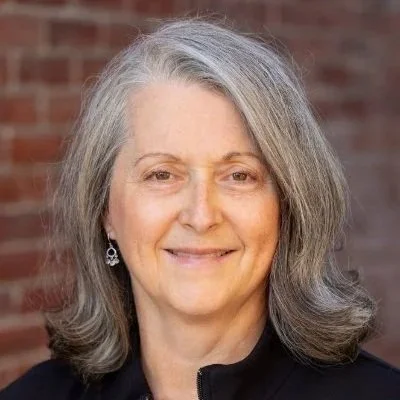
Dorothy Littell Greco writes about how the gospel is meant to change everything. Her most recent book, For the Love of Women, focuses on misogyny. She is a member of Redbud Writers Guild. Dorothy has also worked as a professional photographer for more than forty years. When she's not rearranging words or making photos, she loves to kayak, travel, bike, and concoct gluten free desserts. You can find more of her work on her website (https://www.dorothygreco.com/) or by following her on Instagram (@DorothyLGreco) or Facebook (Words&Images by Dorothy Greco).